This week, alongside the Brill Dictionary of Classical Greek, Accordance has released Robert Beekes’ Etymological Dictionary of Greek (2 vols.). In the preface, Beekes describes his work as “the first comprehensive etymological dictionary of Greek in the English language … incorporating the most recent scholarly literature on Greek etymology” (p. vii).
I’ve used a hardback copy of this lexicon many times in the past, and I’ve been eagerly anticipating the release of an Accordance version. It is finally here, and in this post I want to show you the type of questions Beekes’ EDG can help you answer.
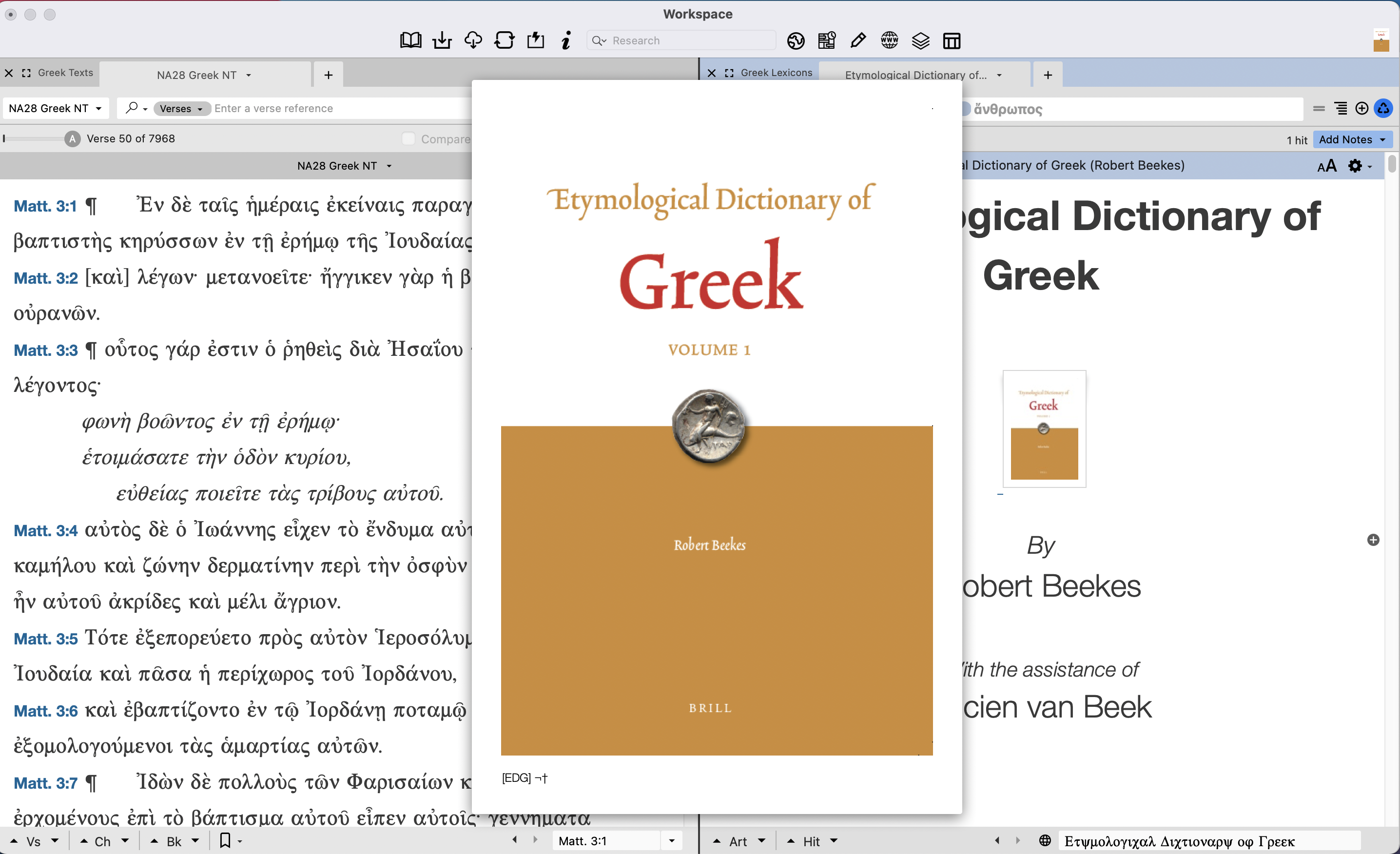
What’s the backstory of this word?
I think I have most often asked this question when teaching and introducing students to new vocabulary. Often, when you introduce a word like γνωρίζω, for example, you want to explain the way the word is built in order to make connections to things students are already familiar with. For example, with γνωρίζω, you might explain that the stem is -γνω-, like γινώσκω, and the ending is -ίζω, which is frequently causative. So one of the meanings of γνωρίζω is to make something known.
But what do you do with a word like ἄνθρωπος, where the backstory is not quite so apparent? And what about the backstory of γινώσκω? We might have offered some explanation of how γνωρίζω and γίνώσκω share a common root, but where did the root come from?
For the remainder of the post I want to show you how Beekes helps answer this type of question, but let’s settle in on an actual question I was asked by a student:
Is there any connection between ἄνθρωπος and ἀνήρ?
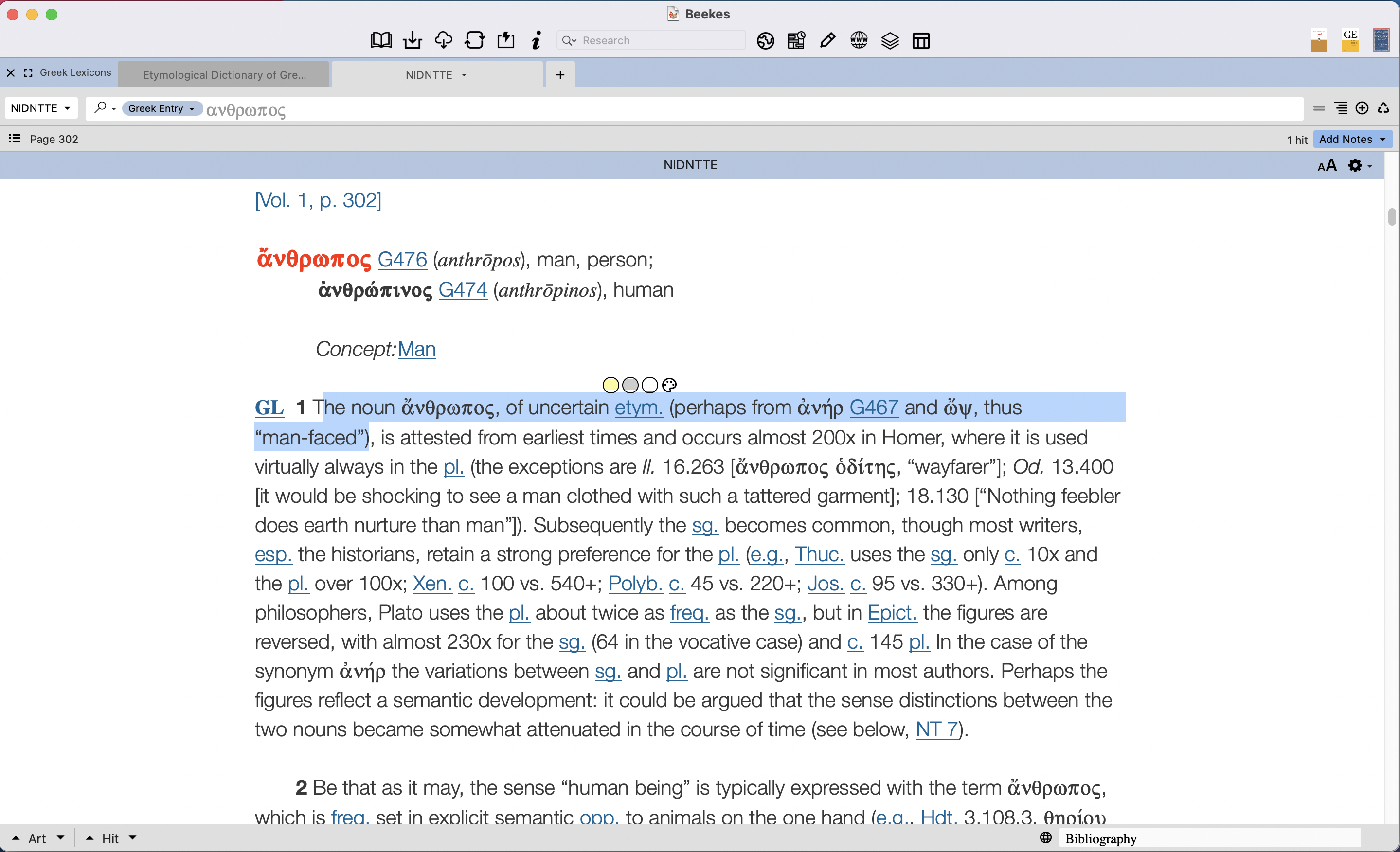
This is a great question in light of the conceptual overlap the words share and the similarity of spelling. Furthermore, the New International Dictionary of New Testament Theology and Exegesis mentions a possible connection between the two words:
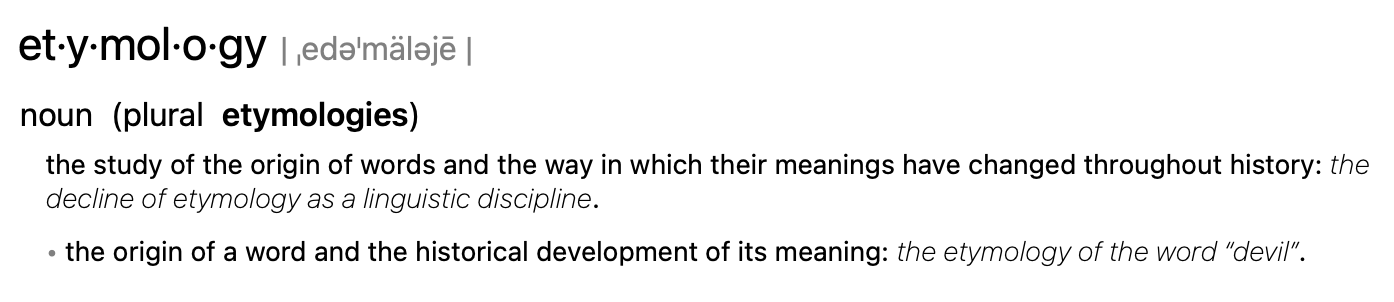
This is a question of etymology, and this is exactly where Beekes’ EDG is so helpful. Here’s a standard definition of etymology.
Before we go through an entry in Beekes’ EDG, let’s first take a look at what a standard lexicon has to offer regarding etymology.
Info from a standard lexicon
You can look for etymological information in BDAG, but you won’t find much help. BDAG tries to point to root words at the very end of its entries, but it doesn’t provide anything more than a headword and a tip of the hat to Chantraine’s Dictionnaire étymologique de la langue grecque.
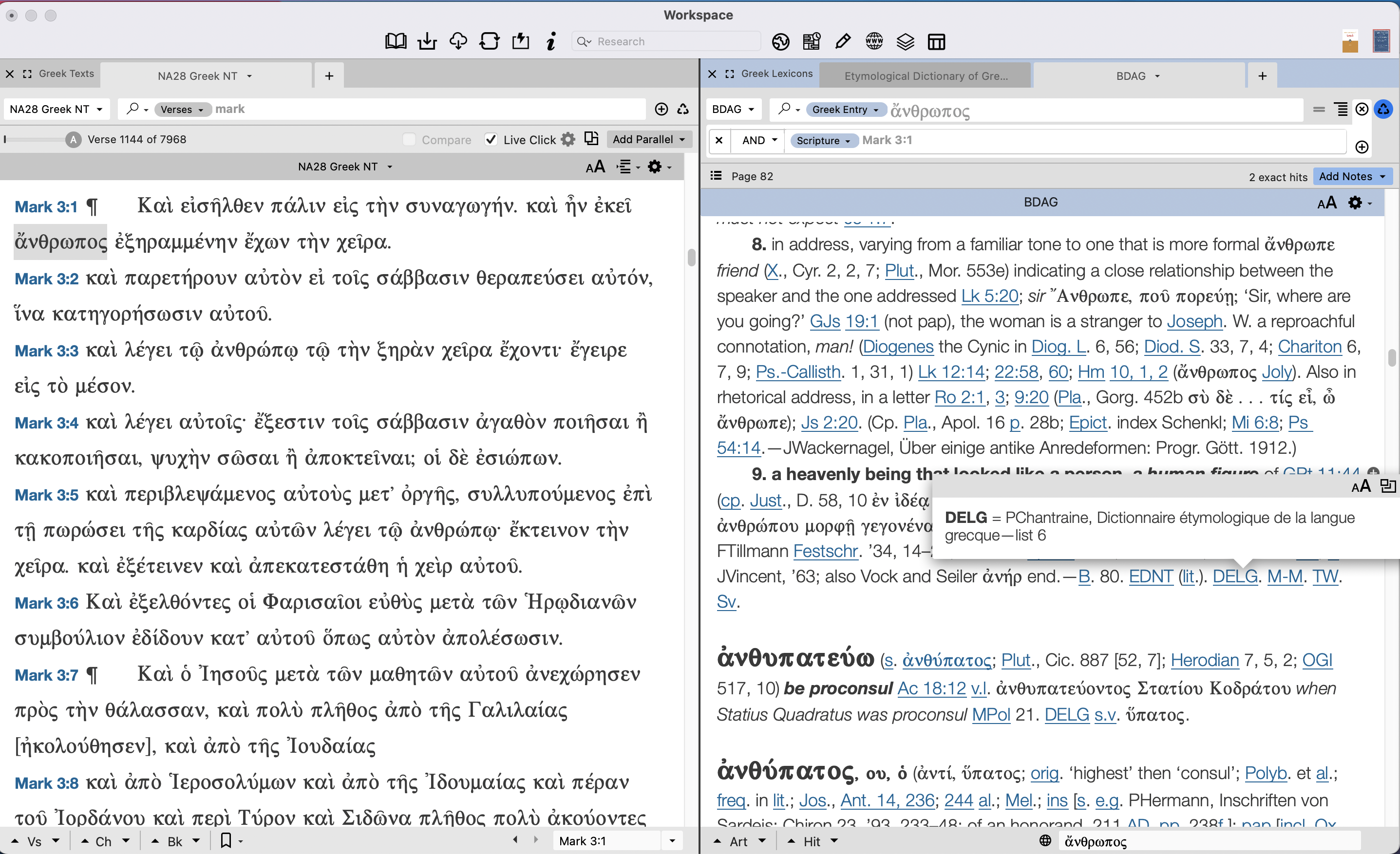
You can see that the entry below our ἄνθρωπος entry, the one for ἀνθυπατεύω, points to ὕπατος in Chantraine, so at least for ἀνθυπατεύω BDAG points you to the root. For ἄνθρωπος, however, we don’t get much help.
An entry in EDG
This is where Beekes’ EDG comes in. EDG is not the type of lexicon that you would want to set as your preferred lexicon. Its goal is not to lay out the semantic range of every word in any particular body of literature. In order to lookup ἄνθρωπος in EDG, I would either (a) open Beekes and type in the word or (b) double click the word I want to lookup and then click on the EDG icon I placed in the top right of the toolbar.
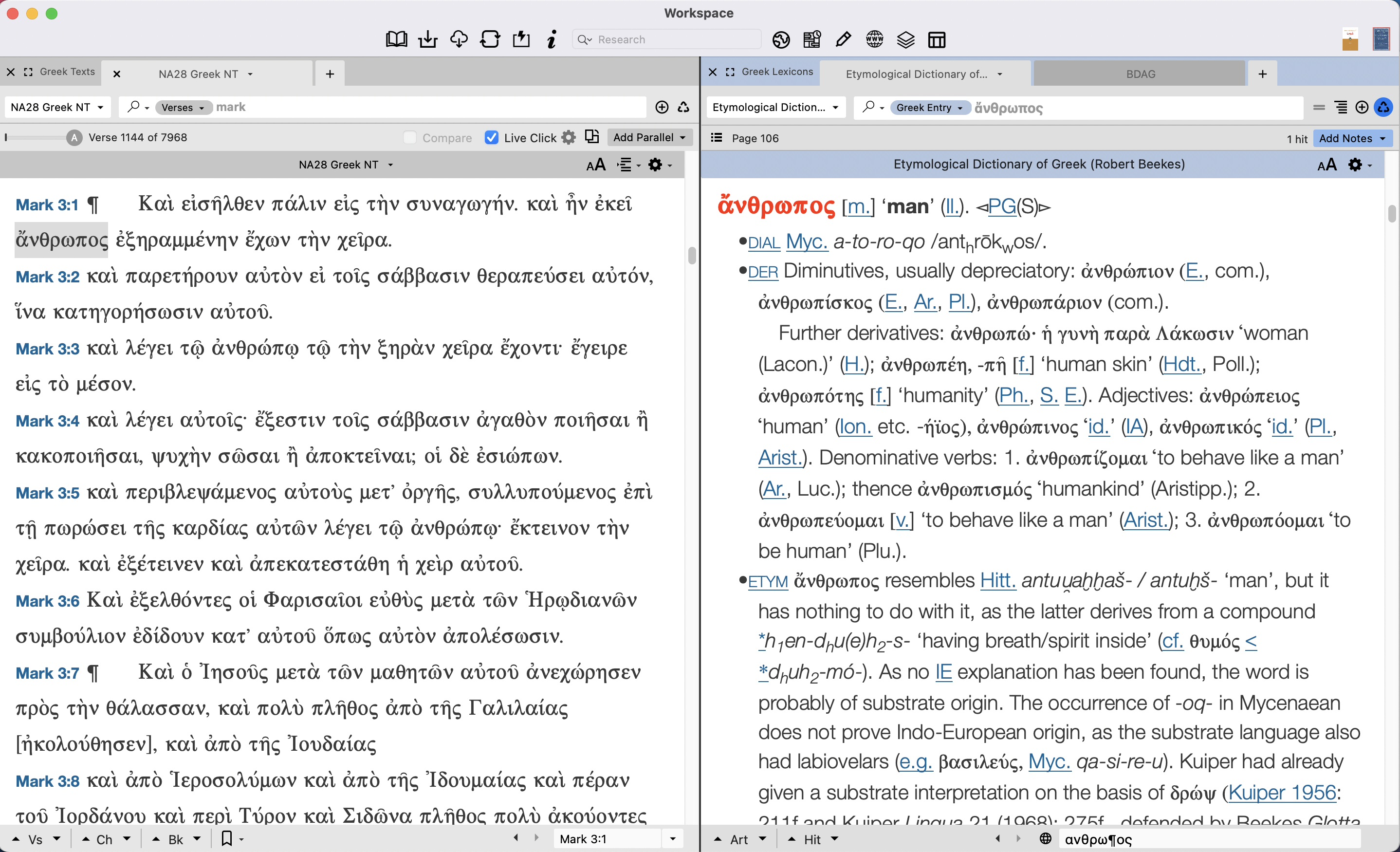
Word origin
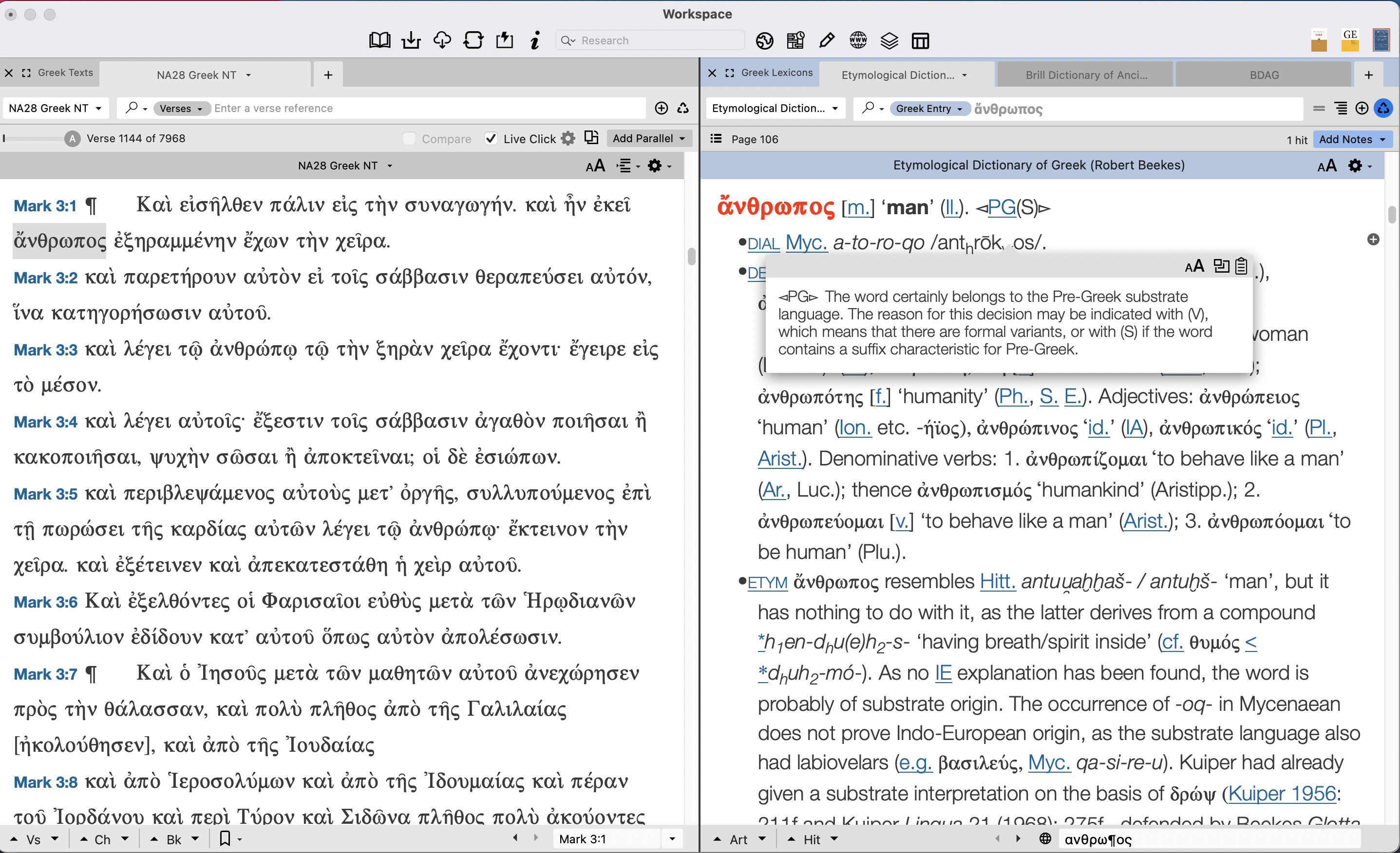
Straightaway, on the first line of Beekes’ entry, we can see that he classifies ἄνθρωπος as belonging to the “Pre-Greek substrate language” because the word “contains a suffix characteristic for Pre-Greek.” This information is encoded in the hyperlinked ◅PG(S)▻ marker there on the first line. Long-holding on that hyperlink displays the explanation of the abbreviation:
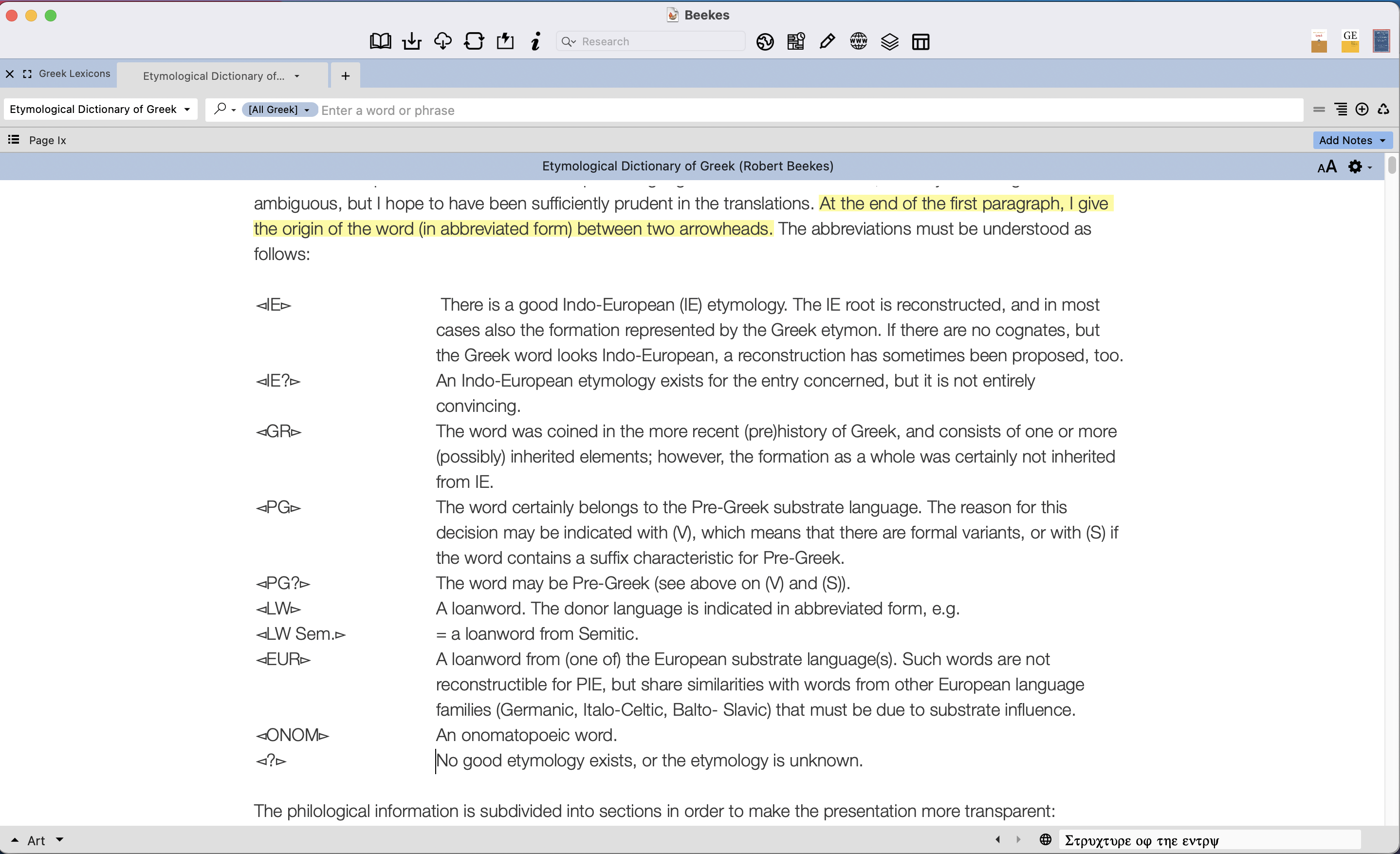
A full listing of Beekes’ word origin classifications is found in the preface, which you can see here:
Dialectical forms & derivatives
The next sections of the entry list dialectical forms and derivatives. Notice how Accordance has broken this entry down into an outline format similar to the way they formatted the Brill Dictionary of Ancient Greek.
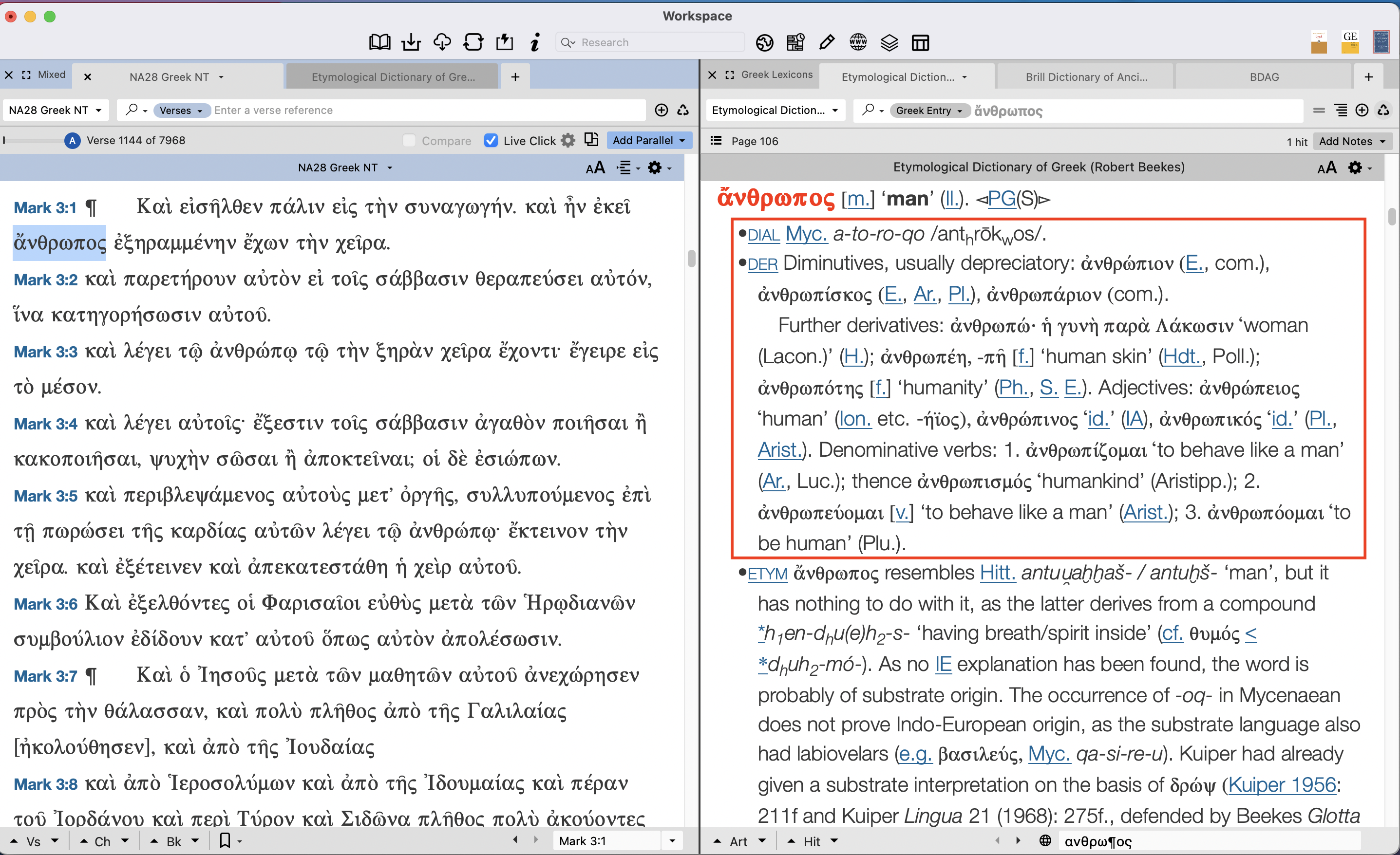
The derivatives section in Beekes is a fantastic place to look for organically related words because here you will a much more extensive list that what you might find in a resource limited to the forms found in scripture.
Etymology
Finally, we come to the etymology section, and it is here that we will find the answer to my student’s question. In this section, Beekes explains his classification of ἄνθρωπος as belonging to the Pre-Greek substrate language rather than having an Indo-European classification.
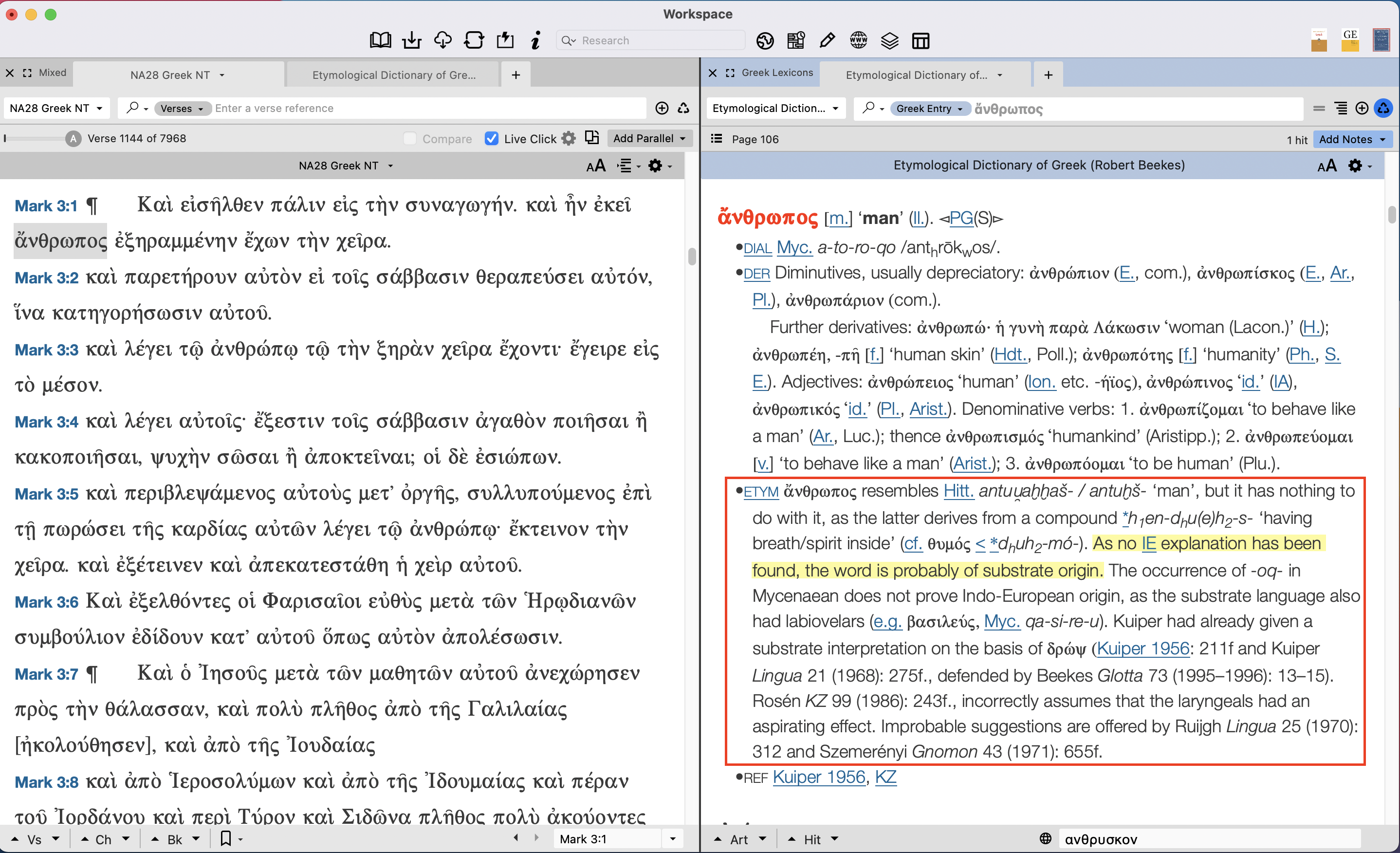
Now, you don’t have to understand everything Beekes says here to benefit from the information. I certainly do not know Hittite or Mycenaean, but I have highlighted a key statement that helps us answer the question of whether ἀνήρ and ἄνθρωπος are etymologically related.
Comparing the entries in EDG
Let’s place the ἄνθρωπος and ἀνήρ entries side-by-side and take a look at both.
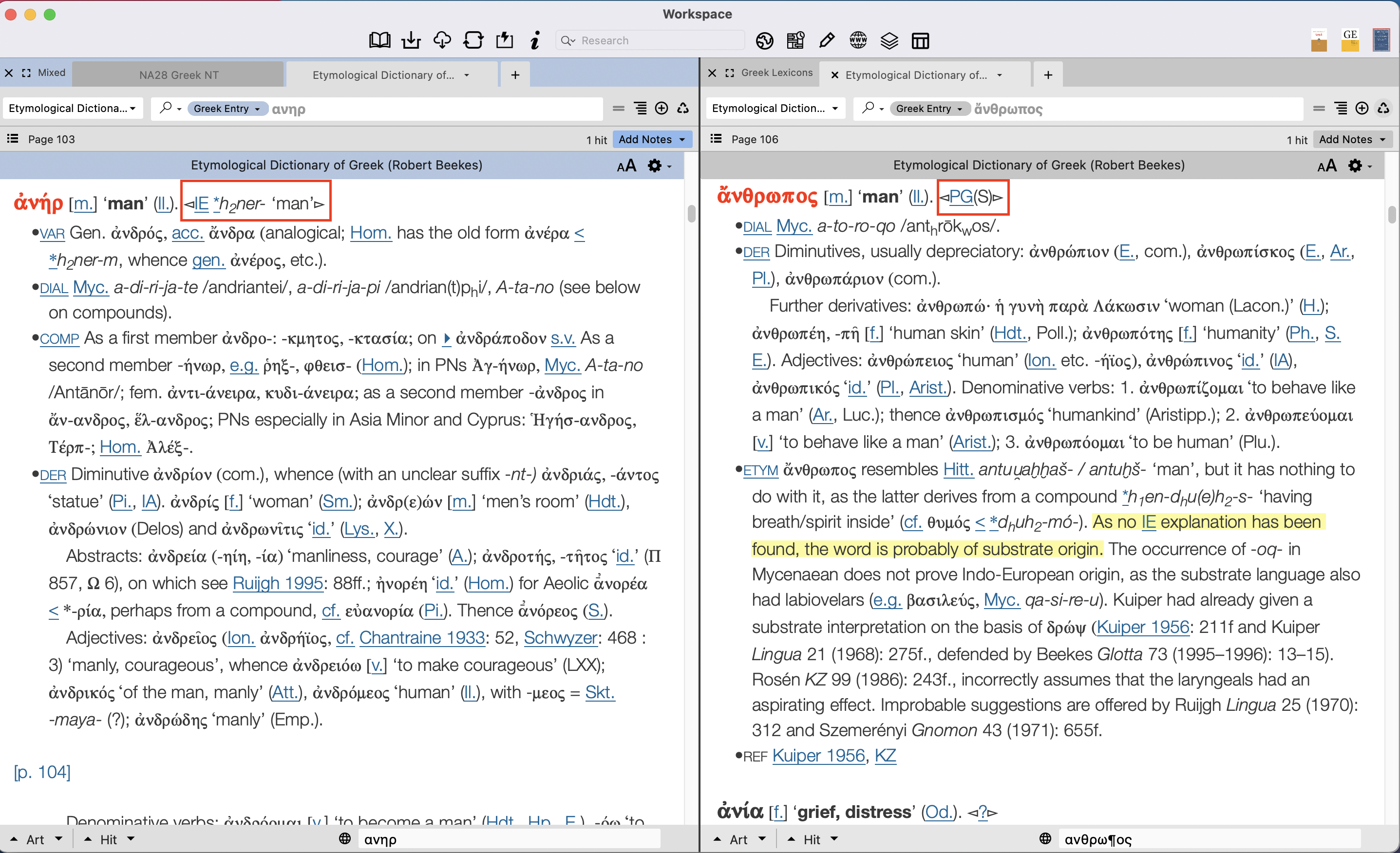
Right away you can see that he classifies the origin of the two words differently. He classifies ἀνήρ as Indo-European and ἄνθρωπος as Proto-Greek. Now let’s line up the etymology sections. Again, ἀνήρ is on the left and ἄνθρωπος on the right:
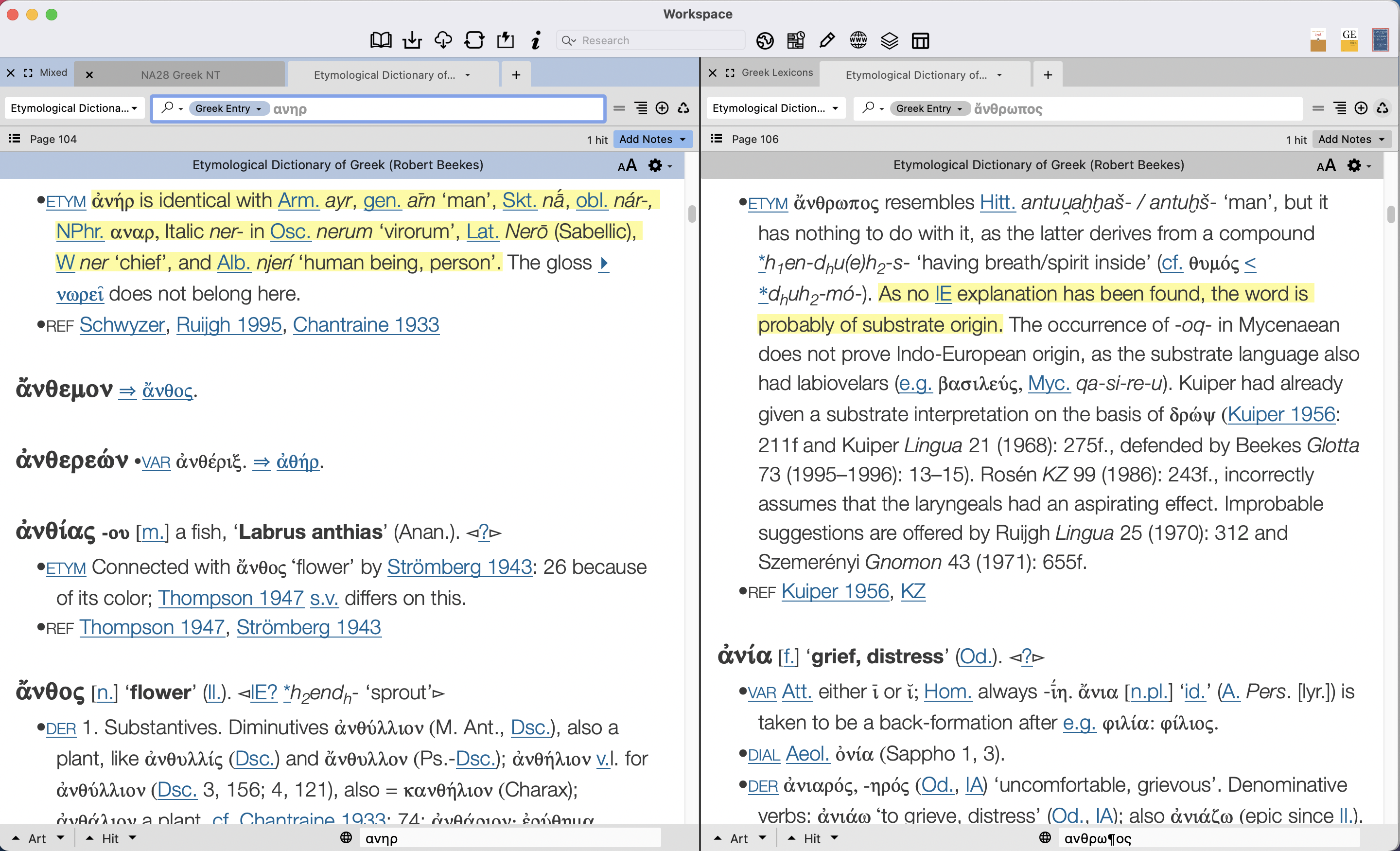
You can see that Beekes lists a host of Indo-European cognates for ἀνήρ, and he explicitly states that he does not find convincing Indo-European explanations for ἄνθρωπος.
Answering our question
Now we are in a position to answer our question:
Are ἄνθρωπος and ἀνήρ etymologically related?
According to Beekes, despite appearances, ἄνθρωπος and ἀνήρ are not etymologically related.
Relying merely on NIDNTTE we might have answered differently simply because the author of the NIDNTTE suggested it as a possibility and we had nothing else to go on. Beekes puts us in a position to offer a more educated opinion.
Conclusion
I hope this gives you a better idea of the type of information you can find in the Etymological Dictionary of Greek (2 vols.). It really is a helpful resource that provides information that’s difficult to find elsewhere.
The primary information Beekes offers is an educated discussion of a word’s etymology, but secondarily his derivatives section is a helpful source for finding related words. Keep in mind that the entries found in Beekes are root words so you won’t find εἰσέρχομαι or καταβαίνω — for info on those words you would need to look up ἔρχομαι and βαίνω.
Accordance currently has Beekes’ EDG on sale for $75 as a part of their Exciting and New Sale, and that is a fantastic price for a fantastic resource.
Thanks to Ryan Baumann (@ryanfb) and Seumas (@jeltzz) for double checking my reading of Beekes on these words. Any mistakes here are obviously mine.
 Brian W. Davidson