This morning I stumbled upon two good examples of how translations often miss the nuance of the source language: One example was at Dunkin Donuts; the other is in John 18. Take a look at the first translation here from Dunkin:
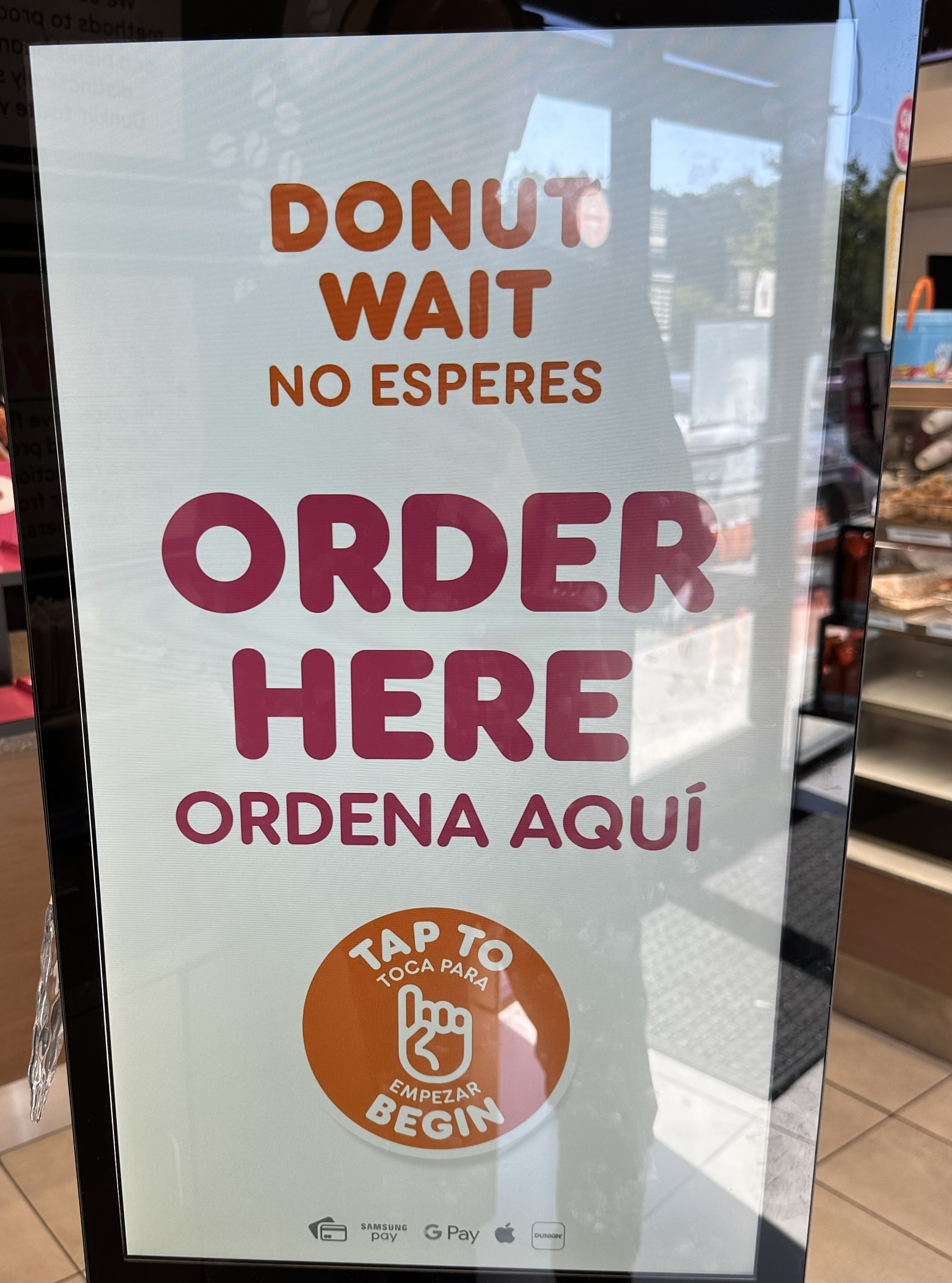
I was drawn in to reading the sign by the large interlinear “ordena aqui,” and I finally made it to the top of the sign, where “Donut wait” is rendered in Spanish, “no esperes,” don’t wait. That’s definitely the intent, but it completely misses the play on the word donut.
There’s a similar thing that happens in translations of John 18:33. As Jesus stands before Pilate, the translations typically render Pilate’s first words as a question:
Are you the king of the Jews? (John 18:33)
If you render this as a question, it makes Jesus’s reply a bit odd:
Jesus answered, “Do you say this of your own accord, or did others say it to you about me?”
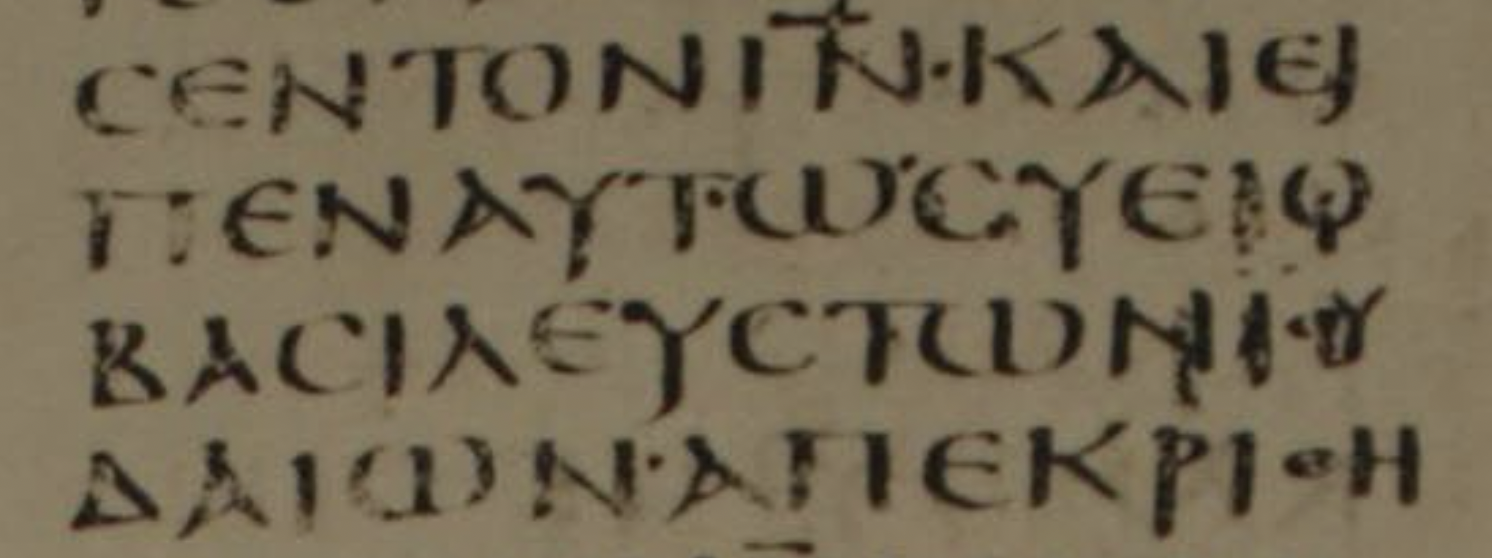
Why would Jesus reply by saying, “Do you say this” when Pilate asked a question? Well, in Greek Pilate makes this statement:
σὺ εἶ ὁ βασιλεὺς τῶν Ἰουδαίων
You are the king of the Jews (John 18:33)
Note that there is no punctuation at the end of that statement. Could this be a question? Well, sure. That’s why the editors of the English and the Greek insert question marks. But the original manuscripts didn’t have punctuation. In this case, rendering Pilate’s words as a question is an editorial decision.
Pilate is most definitely not making a profession of faith. He isn’t saying with praise, “You are the king of the Jews!” It seems to me that he making a statement, and he’s asking for Jesus’s comment on the issue. The statement is “in question”, and if you get that it’s a statement, Jesus’s reply suddenly makes more sense.
I think you could capture the sentiment a little better with a horizontal ellipsis instead of a question mark, like this:
You are the king of the Jews …
It’s a questiony statement.
 Brian W. Davidson
Leave a comment