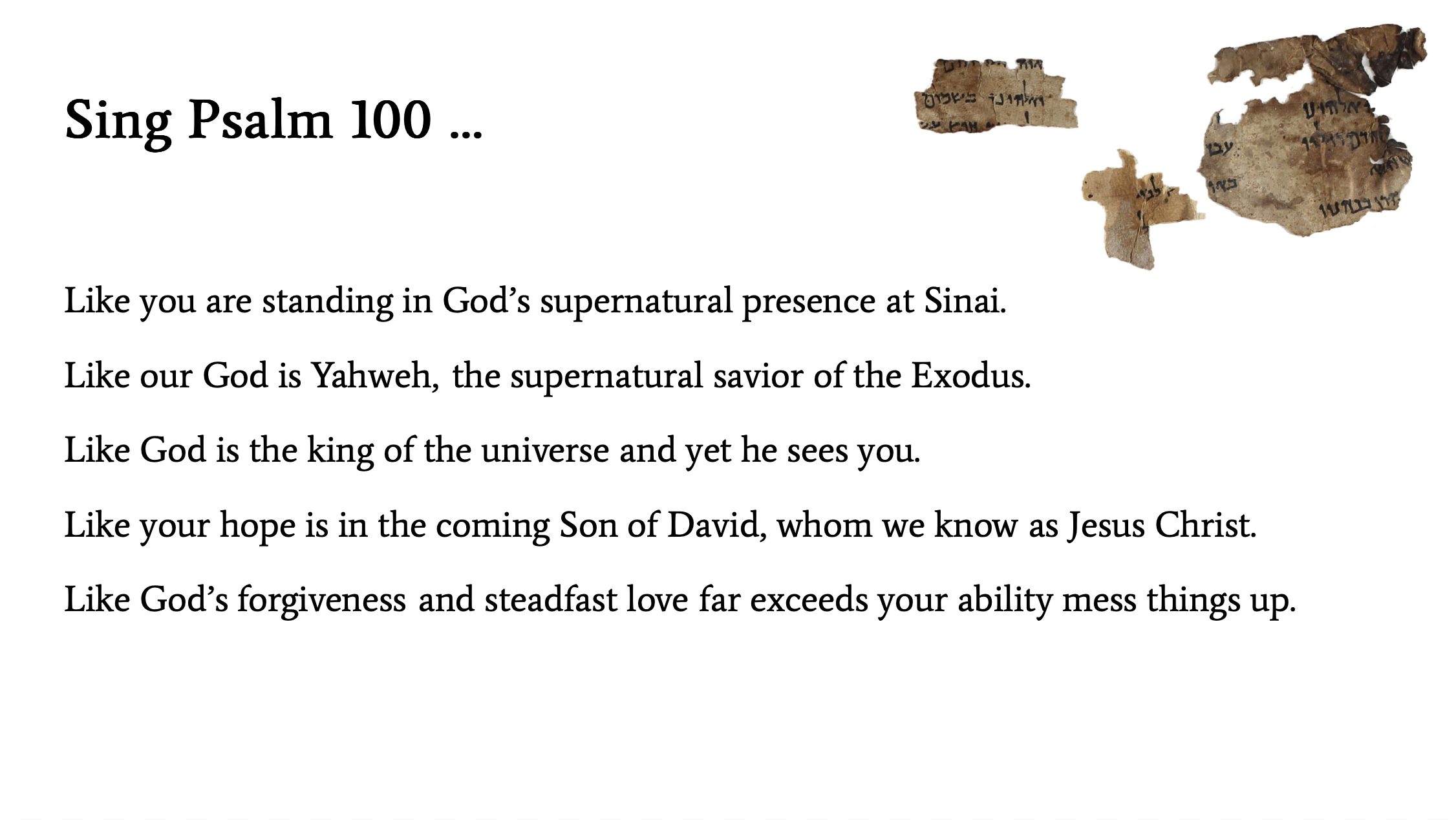
The slides below are framed with respect to singing because this presentation was created for a high school chorus class. It would work perfectly well to replace the word singing with reading or understanding or praying.
The goal is to highlight how Psalms 99 and 101 should impact the way you understand the words of Psalm 100.
By “literary context,” I simply mean that Psalm 100 was intentionally placed between 99 and 101. The ordering of these psalms is ancient and worthy of our attention.
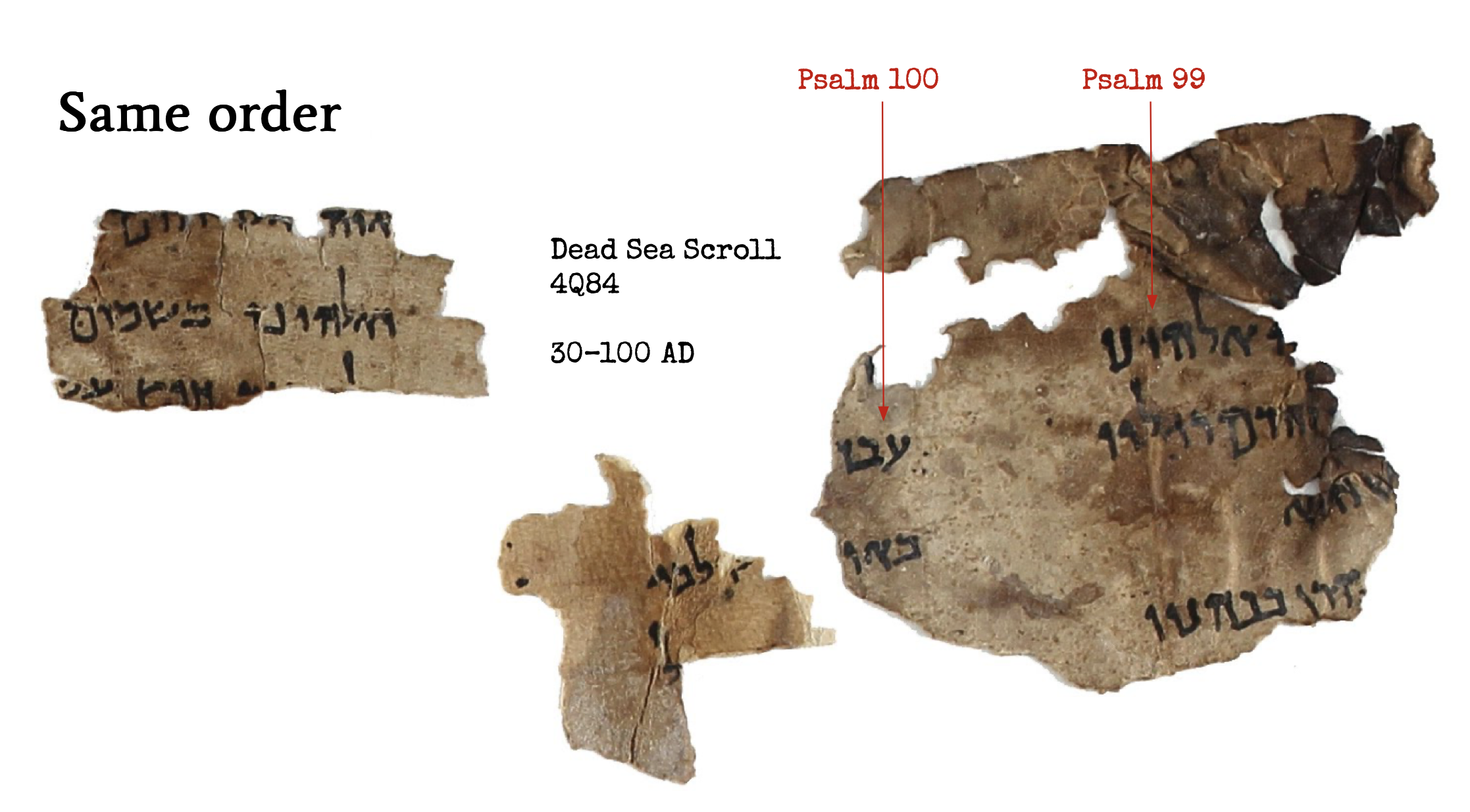
One Dead Sea Scroll (4Q84) fragment makes clear that the order — Psalm 99 and then 100 — is ancient, dating back at the very least to the time of Jesus.
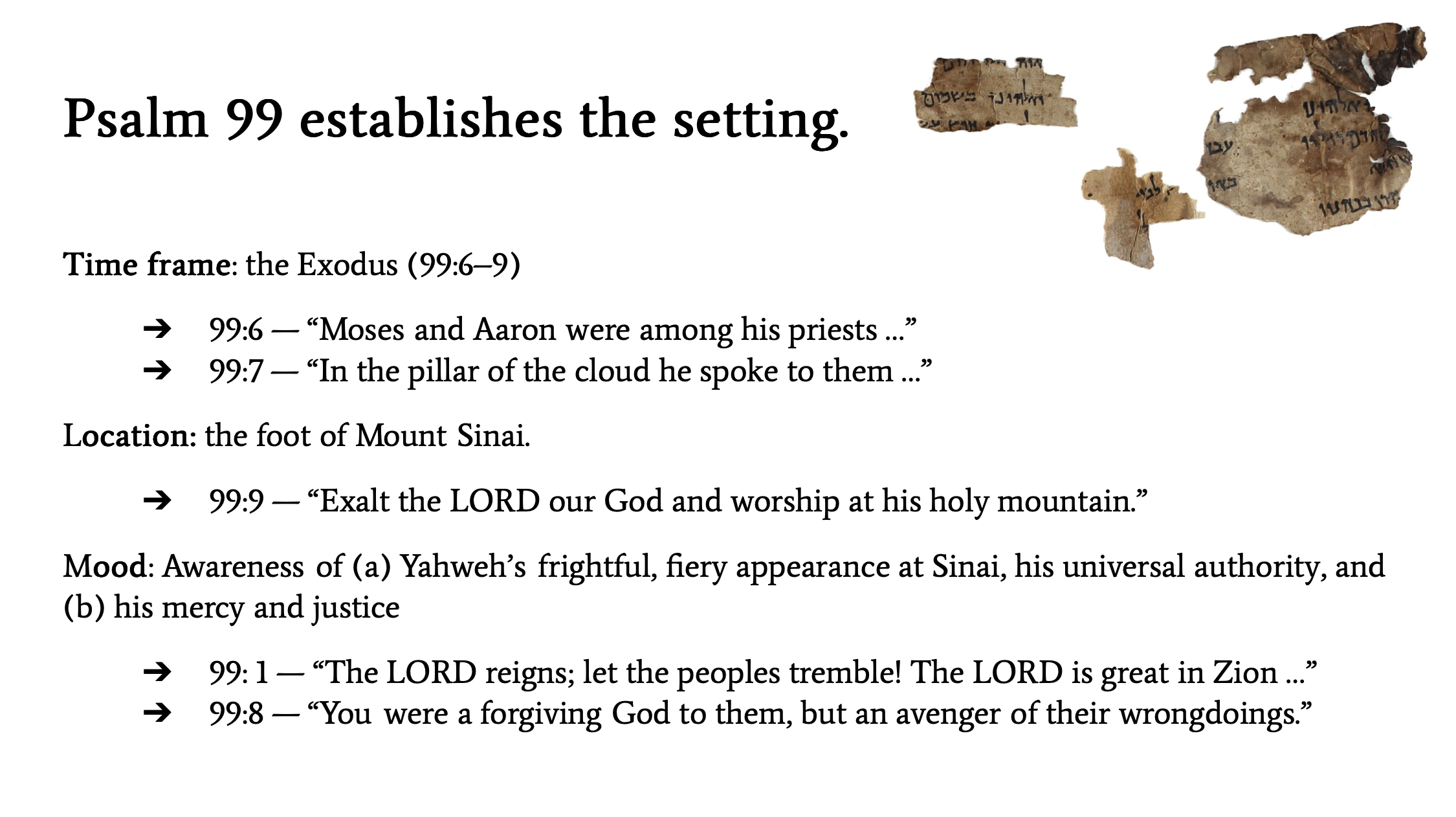
Psalm 99 establishes a time frame, a location, and a mood for understanding Psalm 100: God’s people standing with Israel at the foot of Mount Sinai, beholding the wonderful and terrifying sight of the top of the mountain burning up to the heart of heaven (Deuteronomy 4:11), aware that this frightful sight represents the presence of our God.
Even today, we can read Psalm 100 in this way because Sinai is a setting that is moveable. As the story of God moved forward from the Torah, the presence of the LORD took up residence in other places like the tabernacle, the land, and the temple. Psalm 68:17/18 says, “Sinai is now in the sanctuary.” Paul makes clear that the next lines of Psalm 68, verses 18/19, are fulfilled in Christ’s ascension and the gift of the Spirit. Sinai is now in Christ and his body, the church (Ephesians 4:8).
We can stand “at Sinai” and sing Psalm 100.
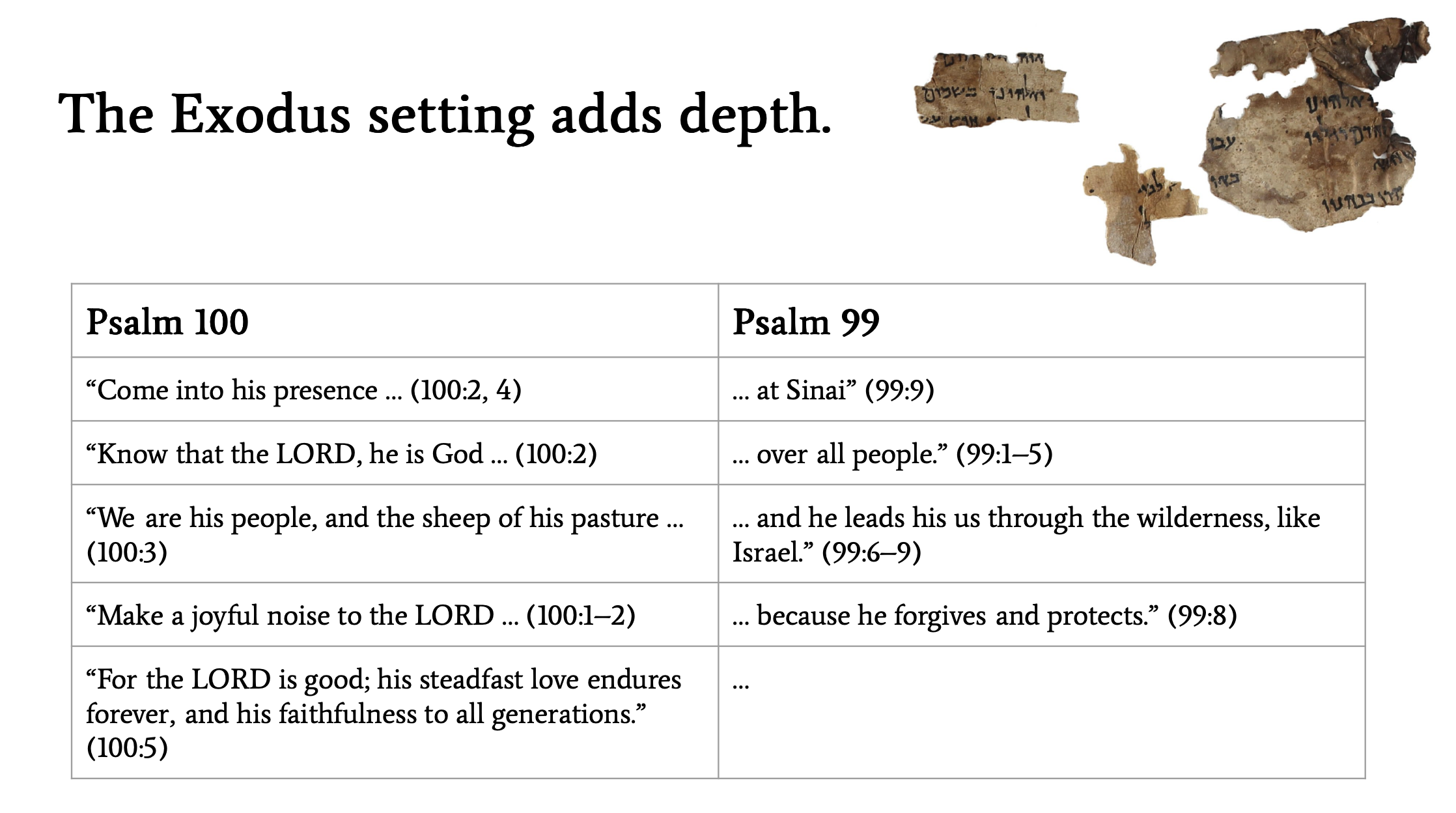
When you read Psalm 100 in light of Psalm 99, you hear the words as one standing at the foot of Sinai, looking up at the creator God whose voice makes you tremble, yet you’re reassured that he is one who is abounding mercy and hesed, like Moses said in Exodus 34:6–7.
O LORD our God, you answered them; you were a forgiving God to them, but an avenger of their wrongdoings. (Psalm 99:8)
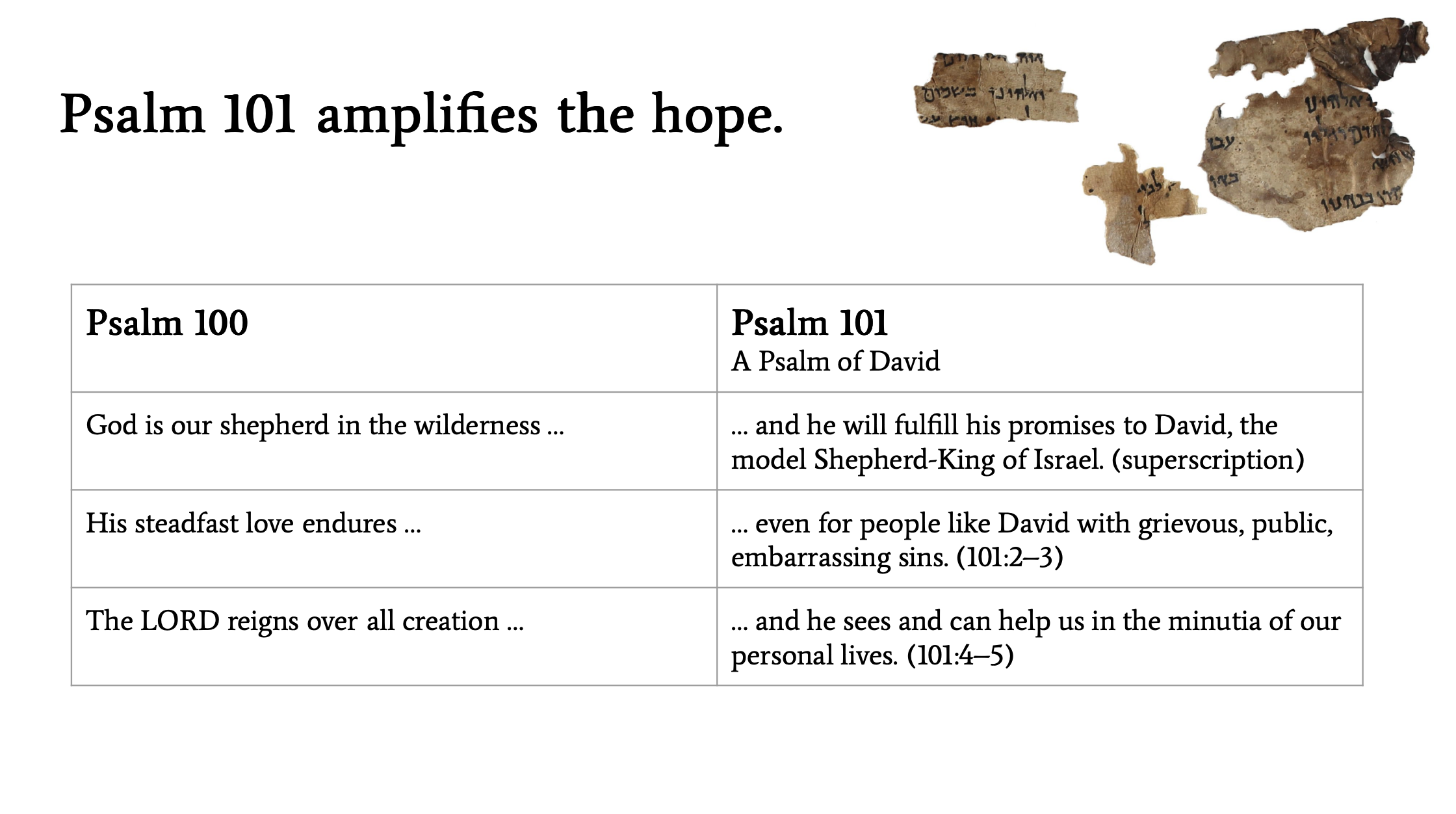
Psalm 101 amplifies the hope of Psalm 100 by recalling the famous promises to David (2 Samuel 7) — a coming, special son of David who will introduce the long-awaited eternal kingdom of Judah (Genesis 49:10), a seed who will crush the head of the snake (Genesis 3:15) and pour out the Spirit from on high (Isaiah 11:1; 32:1, 15).
The God of Psalm 100 shepherds his people in the wilderness, developing the Exodus theme of Psalm 99, and if you remember where the words of Psalm 100 are headed, into Psalm 101, you sing Psalm 100 affirmed by Israel’s shepherd-king, David (superscription to Psalm 101: “A Psalm of David”).
In Psalm 101:3, David stands beside you and reminds you that forgiveness and mercy is available even for big, embarrassing sins, like he committed (adultery and murder). This should impact how you say the words of Psalm 100:
For the LORD is good; his steadfast love endures forever, and his faithfulness to all generations. (Psalm 100:5)
David stands next to you and tells you how even though Yahweh is the cosmic king this in no way means he’s too far away to see you. He’s enthroned in heaven, but he sees the ways you are personally slighted “in secret” (Psalm 101:5). He wants to help.
Understanding the literary and canonical context of Psalm 100 deeply impacts the way you read, pray, and sing Psalm 100.


Leave a Reply