There are good reasons to think that, in Psalm 52, David envisions himself as the lampstand in the tabernacle. Despite his awful circumstances, he’s united with God. He’s the LORD’s anointed, the lampstand upon which the oil burns.
The image is a source of comfort for David:
I am like a leafy olive tree (כְּזַיִת רַעֲנָן) in the house of God. I trust in the steadfast love of God forever and ever. (Psalm 52:8)
Let me try to explain why I think this leafy olive tree is the lampstand in the tabernacle. Again, you can be the judge as to whether this reading makes sense or not.
The Explicit Setting
Psalm 52 has a long heading that makes explicit the circumstances within which the poetic prayer is spoken:
A maskil of David, when Doeg the Edomite came in and declared to Saul and told him, “David has come to the house of Ahimelech.”
David wrote Psalm 52 as a way to process the horrendous situation narrated in 1 Samuel 21–22. I’ll summarize the story briefly: Jonathan warned David that Saul was plotting to kill him (1 Samuel 20). David fled (1 Samuel 21), and he came to the city of Nob, a city of priests. One of the priests, Ahimelech, gave David food and the sword of Goliath to help him. The food Ahimelech gave David was “the bread of the presence” (1 Samuel 21:6).
Jesus comments on this story and makes explicit that the bread came from “the house of God,”
“Have you not read what David did when he was hungry, and those who were with him, how he entered the house of God and ate the bread of the Presence … (Matthew 12:3–4
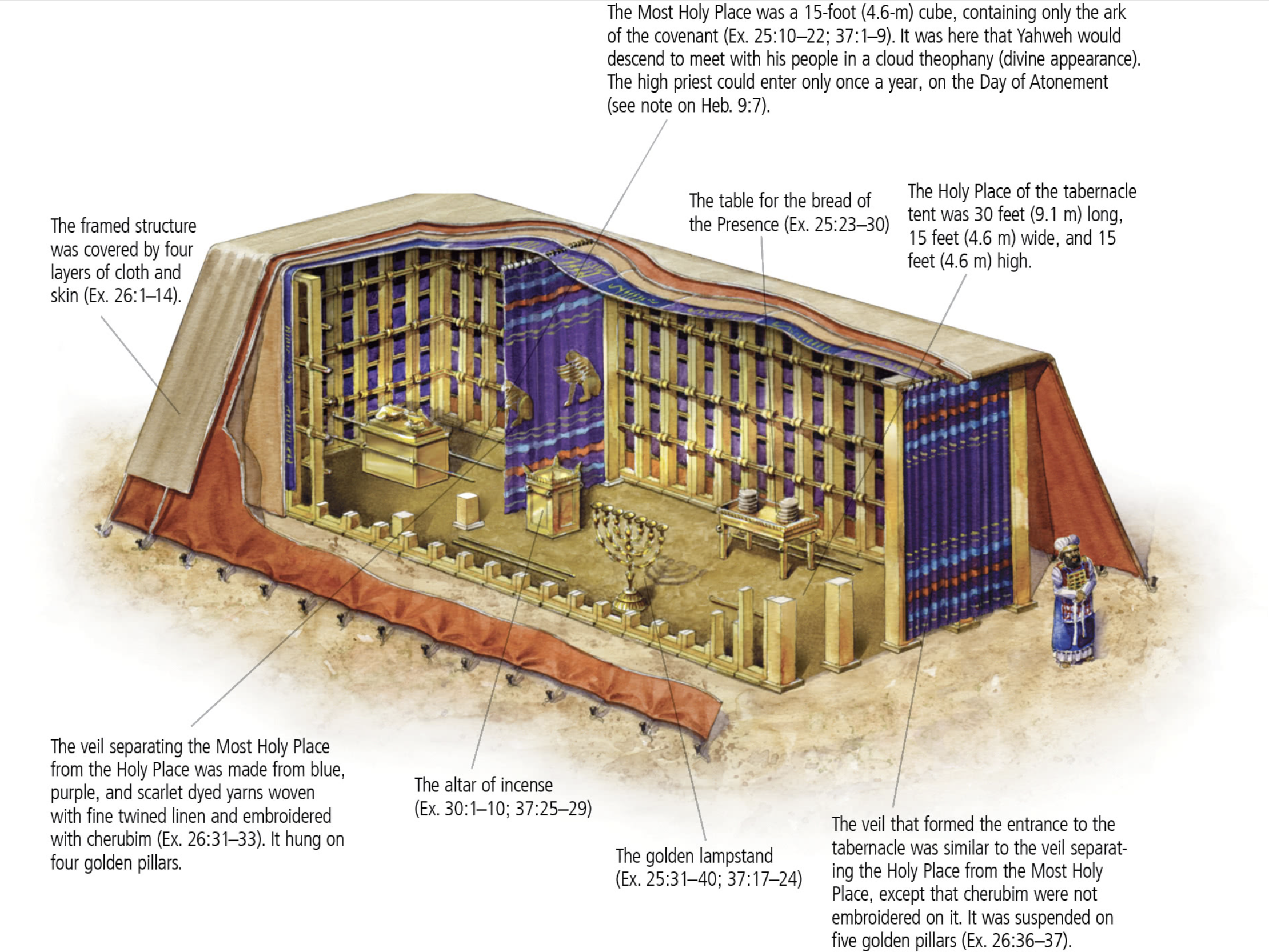
The ESV Study Bible illustrates well the way the holy bread, the twelve loaves, were perpetually present in the tabernacle. You can see the loaves sitting in the middle of this picture, on a table:
When Saul found out about Ahimelech giving David food, Saul commanded Doeg the Edomite to kill all the priests at Nob (1 Samuel 22:18). Doeg does it (1 Samuel 22:18–22).
Doeg the Edomite turned and struck down the priests, and he killed on that day eighty-five persons who wore the linen ephod. And Nob, the city of the priests, he put to the sword; both man and woman, child and infant, ox, donkey and sheep, he put to the sword.
That’s the setting for Psalm 52. It’s not hard to imagine that David, the poet, would need to process this tragedy through writing.
One priest, named Abiathar, escaped, came to David, and told him what happened. As David responds, you can hear both his sadness and his resolution to be a place of refuge for Abiathar:
And David said to Abiathar, “I knew on that day, when Doeg the Edomite was there, that he would surely tell Saul. I have occasioned the death of all the persons of your father’s house. Stay with me; do not be afraid, for he who seeks my life seeks your life. With me you shall be in safekeeping. (1 Samuel 22:22)
Psalm 52
With that context in place, you’re now set up to see how and why, at the conclusion of Psalm 52, David envisions himself as the lampstand in the tabernacle.
Here’s a basic flow of thought in Psalm 52:
- First, David speaks to Doeg/Saul in the presence of God, condemning Doeg/Saul as “one who plots destruction” and “loves evil more than good” (Psalm 51:1–3).
- Second, David pronounces God’s coming judgment: Because “you” love devouring words and deceit, “God will break you down forever” (Psalm 52:4–5).
- Third, David says the righteous will see God’s judgment of the wicked and recognize that this is the end of anyone who will not make God his refuge (Psalm 52:6–7).
- Fourth, David envisions himself as a leafy olive tree in God’s house and praises God as the object of his hope. “I will wait for / hope in (קוה) your name, for it is good …” (Psalm 52:8–9).
I am like a leafy olive tree (כְּזַיִת רַעֲנָן) in the house of God. I trust in the steadfast love of God forever and ever. (Psalm 52:8)
What’s Olives Got to Do with the Tabernacle?
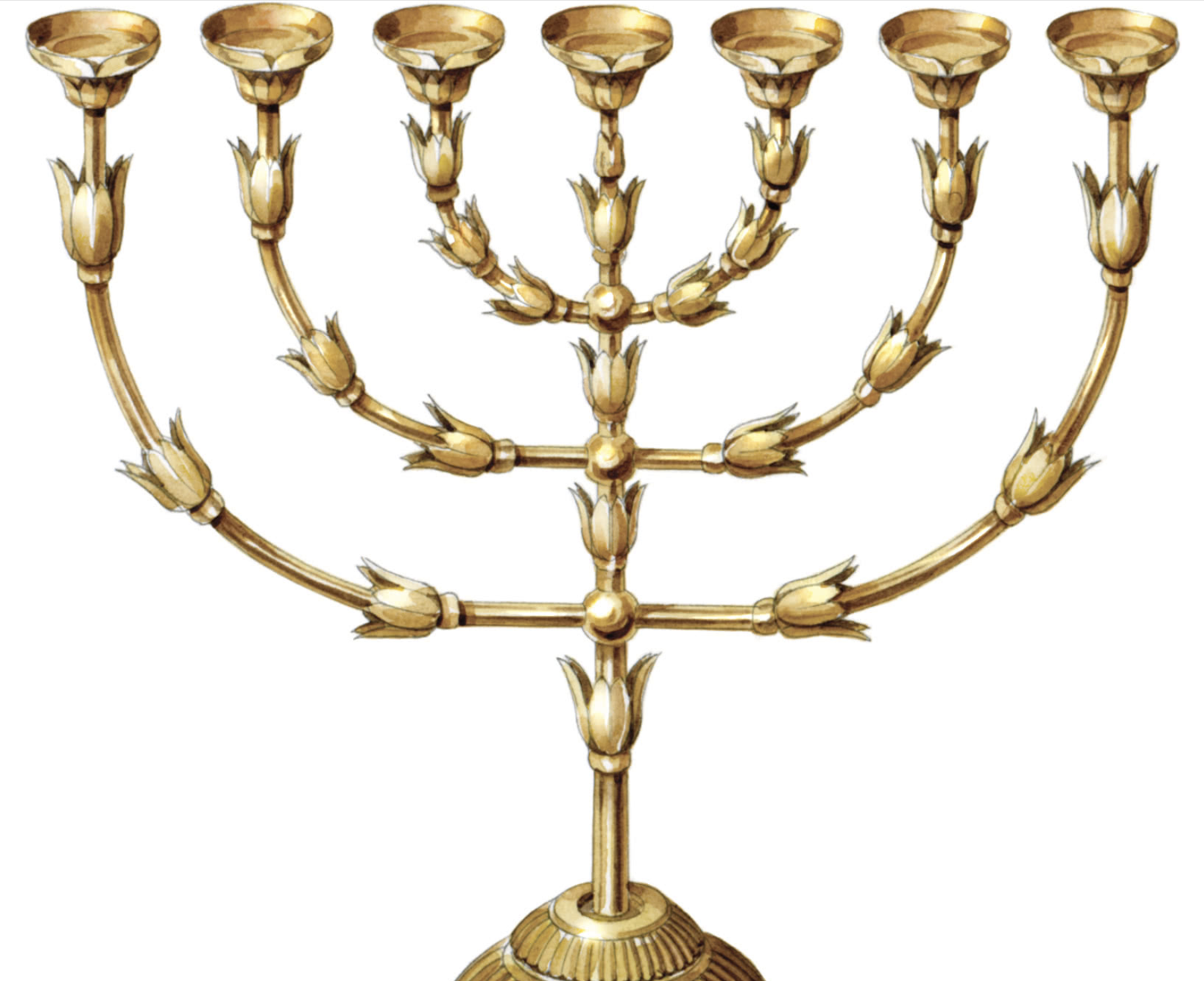
A simple search on the word olive (זַיִת) shows you that there’s only one thing about “God’s house” (the tabernacle) that has to do with olives: It’s the lampstand that sits outside the veil to the holy of holies, directly across from the bread of presence. The lamps of the lampstand burn with olive oil.
In Moses’s instructions for making the lampstand, he describes the lampstand like a tree, but it’s not a normal tree. It seems to be a hybrid creation, sort of like the cherubim woven into the fabric of the veil. The tree has a stem and branches (Exodus 25:31–32), and the branches have “almond blossoms” on them (Exodus 25:33). The branches also have “lamps” at the end, and the lamps burn with olive oil (Exodus 27:20–21; Leviticus 24:1–4).
The lampstand is, in a real sense, an olive tree. The olive oil in its branches burns with the light of God’s presence. David sees himself as this “leafy olive tree.”
Connecting the Lampstand and Bread
It helps to remember that the lampstand and bread are connected via the light of the lamps at the end of the branches: the lampstand stands directly in front of the bread of presence (Leviticus 24:1–9). Notice how Moses describes the scene,
Their calyxes and their branches shall be of one piece with it, the whole of it a single piece of hammered work of purse gold. You shall make seven lamps for it. And the lamps shall be set up so as to give light on the space in front of it. (Exodus 25:36–37)
In Scripture, the descriptions of the bread and lampstand are always next to each other:
- Exodus: bread (25:23–30) and lampstand (25:31–40)
- Leviticus: lampstand (24:1–4) and bread (24:5–9)
As David processes the awful situation with Doeg, he thinks of the bread he received from Ahimelech. He recalls the lampstand and the olive oil, on fire, giving light that represents God’s presence. Despite his awful circumstances, he knows God is with him. He’s the one Samuel anointed with oil, and God is with him despite the horrendous fallout occasioned by him eating the bread of Presence.
In the body of David, the oil and the bread are connected. He’s the lampstand; God’s presence is the light.
Conclusion
The bread and the “leafy olive tree” are connected (a) in Scripture, (b) in the tabernacle itself, and (c) in David’s imagination. David received the bread from the priest, he ate it, and he now envisions himself, like the tree, aflame with God’s presence, despite his circumstances, on the run, living in a cave.
That’s the takeaway here: God is with David, and David portrays his union with God in quite a striking, memorable way. The oil Samuel used to anoint him (1 Samuel 16:13) burns atop David, even though it looks like David has messed everything up.
I am like a leafy olive tree (כְּזַיִת רַעֲנָן) in the house of God. I trust in the steadfast love of God forever and ever. (Psalm 52:8)
If God’s presence can be with David in the mist of conflict and the horrendous messes of life, he can be with us who take refuge in his son (Psalm 2:12).


Leave a Reply